No Products in the Cart


Last Updated: November 9, 2026
Quick Summary
The best home decor to buy second hand includes mirrors and wall pieces, vintage furniture like dressers and tables, glassware and vases, and trays or baskets. Solid wood, sound joints and intact finishes signal quality, while chips, cracks and mold are warning signs. Clean each piece by material, and let it air for 48 to 72 hours before bringing it inside.
Buying second hand home decor is one of the smartest ways to build a space with character. Many shoppers find that secondhand pieces carry a patina and quality that new mass-produced items rarely match. Thrifting also keeps good pieces out of landfills, which appeals to buyers who care about sustainability.
Interest in thrifting has grown as shoppers look for curated, one-of-a-kind pieces. A common approach is to mix a few secondhand finds with newer curated pieces, so the room feels collected rather than catalog-perfect. That balance is where this guide starts.
Mirrors and wall pieces are often the easiest category for a first secondhand purchase. They are light, they take up little space in a shipping box, and a good frame can carry a room. Look for solid wood frames with visible grain, and check the back for warping or loose hardware.
When you shop, inspect the glass or mirror surface under good light. Silvering that has begun to spot or cloud is hard to reverse, so pass on pieces with dark blotches. Vintage frames with minor wear often add more character than new ones, and a light sanding and wax can refresh the finish.
Vintage furniture rewards careful inspection. Pull out drawers, look at the joints, and press firmly on the top and legs to check for wobble. Solid wood and well-made joinery usually signal a piece worth restoring, while heavy veneer or particleboard is harder to repair.
Restoration is often more manageable than buyers expect. Tighten loose joints, clean the surface gently, and refinish only where the wood needs it. Preserve original hardware when you can, because it adds authenticity and value. Resale value tends to hold up best for pieces with intact finishes and sound structure.
Glass and ceramic pieces can make excellent secondhand decor, but they need a closer look. Check rims and bases for chips and hairline cracks, and hold the piece up to light to spot faults you might otherwise miss. Pieces that ring clearly when tapped are generally sounder than those that sound dull.
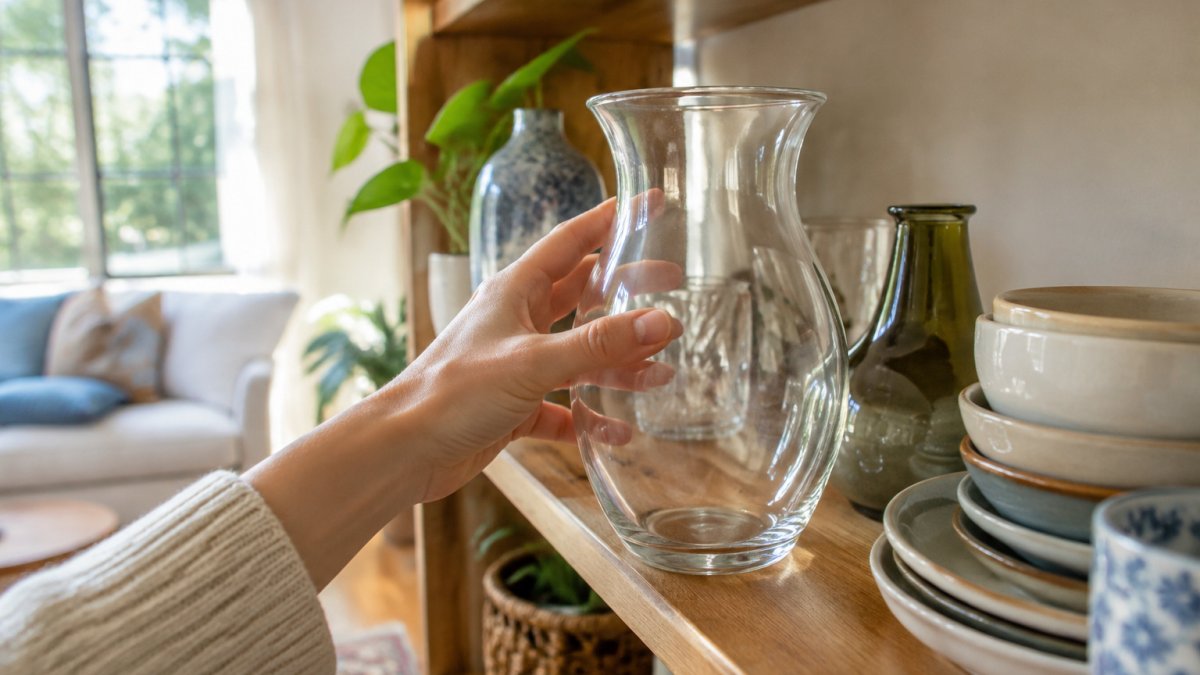
If you want new pieces with clear quality details, the Woodbury Bud Vase in Gift Box from Simon Pearce is made from lead-free glass in the USA, with an 8 oz capacity and a size of 2¼"W x 2¼"D x 6½"H. It is dishwasher-safe, though hand washing is recommended, and it is priced at $90.00. For a larger statement piece, the Napa Home & Garden Avila Vase Clear is made in Spain from 100% recycled glass, measures 13.5 x 13.5 x 17.75, and costs $200.00. You can also see the Sakura Planter Oval-Port 68, a handcrafted porcelain planter measuring 7"H x 10"W x 9"D, priced at $90.00 at shop the Sakura Planter Oval-Port 68.


Trays, baskets and catchalls are forgiving to buy secondhand because they are rarely used for anything demanding. Check woven baskets for broken strands and mold, and look at the bases of metal or wood trays for rust or water damage. Small catchalls are a good place to start if you want to test your eye.
For a new tray with a finished look, the White Mother of Pearl Tray from 8 Oak Lane measures 15.5" x 8.5" x 2" and is inlaid with real mother of pearl shells. It is priced at $60.00 and is spot-clean recommended. You can browse this decorative tray as a new option alongside thrifted finds.

Most secondhand guides stop at "give it a wipe." That is not enough. Thrifted decor can carry dust mites, mold spores, smoke residue, and in rare cases pests, so a material-by-material protocol is the difference between a piece that looks clean and one that is actually safe to bring inside.
Start with a dry quarantine. Set the piece in a garage, porch, or utility area for 48 to 72 hours. This gives you time to inspect for live insects, frass, or musty odor before the item enters living space.
Dust and vacuum first, always. Use a HEPA vacuum with a brush attachment on upholstery, baskets, and lampshades. A microfiber cloth picks up loose dust on hard surfaces. Do this before any wet cleaning, because wetting dust on wood or fabric can drive grime into the grain or weave.
Match the cleaner to the material. For sealed wood, a few drops of mild dish soap in warm water on a barely damp cloth is enough; dry immediately and never let water sit on joints.
Sanitize with the right agent. Diluted isopropyl alcohol (70 percent) on a cloth is effective on glass, metal, and sealed hard surfaces, but test on a hidden spot first because it can dull some finishes and lift paint. Quaternary disinfecting wipes are convenient for non-porous items but can leave residue on wood.
Handle textiles and upholstery separately. Vintage linens should be washed before use, and anything with smoke or mildew odor should be aired outside for at least a full day. For upholstered furniture, vacuum both sides of cushions and consider a professional steam cleaning if the piece is valuable.
Check for lead and other hazards on painted or glazed pieces. Older painted furniture and some imported ceramics may contain lead in the finish or glaze. A simple lead test swab from a hardware store costs a few dollars and takes minutes.
Dry everything completely. Mold grows in residual moisture. After any wet cleaning, leave wood and textiles in a well-ventilated area until fully dry, and avoid stacking damp items. A fan speeds the process and reduces the risk of warping.
A common pattern among experienced thrifters is to keep a small cleaning kit ready: microfiber cloths, a HEPA vacuum, mild dish soap, 70 percent isopropyl alcohol, a soft brush, and lead test swabs. That kit turns a risky find into a safe one in under an hour.
The article breaks safe cleaning into material-specific steps, summarised below.
| Material | Cleaning agent | Watch out for |
|---|---|---|
| Sealed wood | Mild dish soap in warm water, barely damp cloth | Water sitting on joints |
| Unsealed or waxed wood | Wood-safe cleaner, then dry buff | Skip soap entirely |
| Glass and glazed ceramic | Warm soapy water | Sudden temperature changes that crack vintage glass |
| Unglazed terra cotta and stone | Dry brush only | Water driving stains deeper |
| Glass, metal, sealed hard surfaces | 70 percent isopropyl alcohol | Test a hidden spot first; can dull finishes |
| Washable textiles | Cold gentle wash, color-safe detergent | Mildew odor that persists after airing |
Online marketplaces are where the best secondhand decor moves fastest, but the photos are curated and the descriptions are often thin. The buyers who consistently find quality pieces are not luckier; they use specific search tactics and inspection questions that filter out junk before they ever message a seller.
Use search operators and saved searches. On most marketplace platforms, you can search by exact phrase in quotes, exclude terms with a minus sign, and filter by distance, price, and condition. For example, searching "solid wood" dresser -particleboard -laminate narrows results to pieces worth restoring.
Search by maker, material, and era, not by category. Instead of "vase," search "Simon Pearce glass," "mid-century teak," "brass candlestick," or "hand-thrown stoneware." Specific terms surface listings from sellers who know what they have, and those listings tend to include better photos and more honest condition notes.
Read the photos like an inspector. Zoom in on joints, edges, and the back of frames. Look for water rings, chips on rims, cracks at stress points, and mismatched hardware that suggests a repair. Ask for a photo of the maker's mark or label, which confirms authenticity and often reveals the material.
Ask a short, specific question set. A message that asks for close-ups of joints and edges, the exact measurements, whether the piece has any odor or wobble, and whether the price includes delivery gets you more information in one exchange than a vague "is it in good condition?" ever will.
Factor shipping and delivery into the total cost. Heavy glass, mirrors, and furniture can cost more to ship than the item itself. Local pickup is often the best route for furniture, and some marketplaces let you filter by pickup only.
Vet the seller, not just the item. Check the seller's history, response rate, and reviews for mentions of accurate descriptions and safe packing. A seller with many listings in a narrow category, such as only vintage glass or only mid-century furniture, is often a dealer who knows the material and prices accordingly.
Know the return and damage policies before you pay. Most peer-to-peer marketplaces do not guarantee returns, so ask about damage policy in writing. If the platform offers buyer protection, use it and pay through the platform rather than off-platform.
Set a price ceiling and a condition floor. Decide in advance what you will pay for a given piece and what flaws you will accept.
Start with one piece that fits a space you already use every day. To see how a finished look comes together, read how to style curated home decor: a step-by-step guide. A mirror for the entry, a tray for the coffee table or a vase for the kitchen counter all make a low-risk first purchase. Choose something small enough that a mistake costs little.
Once it is home, live with it for a few days before deciding whether it belongs. If you want help styling new and secondhand pieces together, our guide on how to style curated home decor walks through the process step by step. At Home 2 Court, we curate pieces that pair well with thrifted finds, so you can build a room that feels personal and complete.
Glassware, vases, wood trays, mirrors, and solid wood furniture such as dressers and side tables tend to offer the best value secondhand. These pieces are durable and often hold their original craftsmanship for decades. Check each item for chips, cracks, and wobbly joints before buying. Lamps are worth checking for working wiring, and framed art is usually easy to find in good condition at thrift stores and estate sales.
Start with a soft damp cloth and a mild dish soap for most glass, ceramic, and lacquer pieces. Avoid harsh chemicals and citrus-based cleaners, which can cloud glass over time. Wash items by hand rather than in a dishwasher unless the manufacturer says it is safe. For wood, use a dry cloth first and test any cleaner on a hidden spot. Allow everything to dry fully before display to prevent water spots and mildew.
Online marketplaces, resale sites, and local buy-and-sell groups all list secondhand decor, and each has different buyer protections. Search with specific terms like brand names or materials to narrow results. Ask sellers for close-up photos of chips, scratches, and labels. Check return policies before purchasing fragile items, since shipping damage is a common risk with glass and ceramic.
Be cautious with upholstered furniture, mattresses, and anything with a cracked or heavily worn finish. Avoid pieces with signs of pests, strong odors, or water damage. Electrical items such as lamps should be checked for frayed cords before use. Many buyers also skip used textiles that cannot be fully laundered or sanitized at home.

