No Products in the Cart


Last Updated: October 31, 2026
Quick Summary
Common pickleball injuries include ankle sprains, calf strains, knee injuries and falls that can break wrists. Most come from sudden stops, quick direction changes, fatigue and cold muscles, and they can be prevented with a short warm-up, supportive court shoes and controlled footwork.
Pickleball is one of the fastest-growing sports in the United States, and that growth brings more injuries. Many of them are preventable. Knowing the common pickleball injuries and how to prevent them keeps you on the court longer and off the couch.
Pickleball looks gentle, but it demands quick stops, sudden lunges and sharp twists. Those movements load your ankles, knees, shoulders and wrists in ways a casual walk never does.
Here's the thing: most injuries come from a handful of patterns. Learn those patterns and you can spot risk before it turns into pain.
Ankle sprains and calf strains top the list. Players roll an ankle while cutting toward a drop shot, or pull a calf while pushing off to reach a ball. Both injuries show up fast and can sideline you for weeks.
Knee injuries come next. A quick twist while planting your foot can damage ligaments or the meniscus. These injuries often happen during the last few games of a long session, when legs are tired.
Falls cause the most serious harm. A player who slips on a wet surface often catches themselves with an outstretched hand, which can lead to a wrist fracture.
Ankle sprains happen when the ligaments stretch or tear, usually from rolling the foot inward (Sprained Ankle - OrthoInfo). Calf strains involve the muscle fibers, often from sprinting or lunging without warming up. Good footwear and controlled footwork reduce both.
Knee injuries usually come from pivoting with a locked foot. Watch out: twisting a planted knee is one of the most common ways recreational players get hurt, so slow down on quick turns.
Falls often come from losing balance on a sudden stop. Catching yourself on an outstretched wrist can break the bones there. Practicing controlled falls and staying low on the court helps.
The table below sums up the three most common injury types and what drives each one.
| Injury | Common cause | Key detail |
|---|---|---|
| Ankle sprains and calf strains | Rolling the foot inward during cuts; pulling a calf while lunging | Both show up fast and can sideline you for weeks |
| Knee injuries | Twisting or pivoting with a locked foot | Often happen in the last games of a long session |
| Falls and wrist fractures | Losing balance on a sudden stop | Catching yourself on an outstretched hand can break wrist bones |
A short warm-up before play is one of the simplest injury prevention steps. Spend five to ten minutes on these moves:
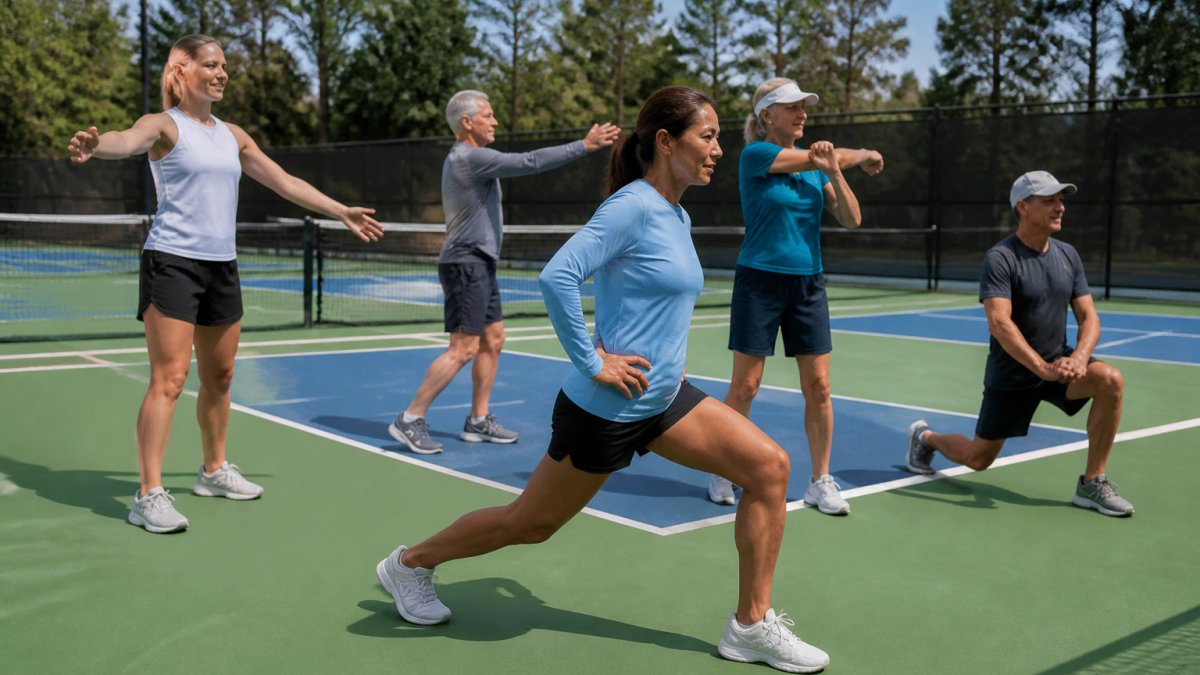
These pickleball warm-up exercises prepare your muscles for the sudden bursts of movement the sport demands. Stretch gently afterward too, focusing on calves, quads and shoulders.
Footwear matters more than most players realize. Pickleball involves lateral movement, so shoes need lateral support and a non-marking outsole with good grip. Running shoes often lack this side-to-side stability and can increase ankle roll risk.
Look for a snug heel, firm midfoot support and a sole designed for court surfaces. Replace shoes once the tread wears smooth. The Pickleball Backpack Tote in Navy-Melbourne at $184.00 provides space for essentials, extra shoes and a change of clothes, with pockets for organization.
Most ankle rolls in pickleball do not happen while running. They happen in the half-second after a player decides to stop, pivot, or reverse direction. The foot plants, the body keeps moving, and the ankle rolls inward. Prevention is mostly about controlling that moment.
A common pattern among players who roll an ankle is a hard, straight-leg stop with the foot turned out. Instead, practice a two-step deceleration: take a short step, then a shorter one, and let your knees bend as you absorb the stop. When you change direction, point your lead foot in the direction you want to go before you push off.
Pickleball backpack/tote Navy-Melbourne →
Reaching is the other big risk. Stretching for a wide ball with your arm and torso instead of moving your feet puts your body past your base of support. If you cannot get there with two steps, let the ball go. A point is cheaper than a sprain.
In doubles, call the ball early and loudly. Collisions and near-misses cause awkward stops and falls. Know where your partner and opponents are before you lunge sideways.
Fatigue is the single biggest factor behind late-session ankle rolls. When your legs feel heavy, your steps get longer and your stops get sloppier. Shorten your points, take the extra rest between games, and treat a tired third game as a signal to slow down rather than push harder.
Our 30oz Tumbler for $34.99 features double-wall insulation that keeps drinks chilled or hot, with a spill-proof lid.
Most injury guides treat every player the same. In practice, a 68-year-old beginner and a 30-year-old former tennis player face different risks on the same court. Tailoring prevention to your profile is one of the most useful things you can do, and it is a step most pickleball injury articles skip.
Age-related changes in muscle elasticity, reaction time, and balance shift risk toward falls and fractures. A few adjustments matter more than general stretching:
New players often get hurt because they do not yet know how to move safely. They lunge at balls they should let go, stop with straight legs, and play longer than their conditioning supports. The fix is mostly pacing: play shorter sessions, focus on footwork over power, and resist the urge to chase every ball in your first few months.
Overconfidence is the main risk here. Players with a tennis or racquetball background often bring aggressive lateral movement and hard stops that worked on other courts but load the ankle and knee differently on a pickleball surface. Shoulder and elbow overuse also builds up quietly in players who hit hard repeatedly without recovery days.
A previous ankle sprain, knee injury, or shoulder problem raises your risk of recurrence. Bracing or taping a previously injured ankle during play is a common and reasonable step, and a clinician can advise on whether it fits your situation. Anyone with a history of joint problems, heart conditions, or recent surgery should check with a doctor before starting or returning to play. A few sessions of easy play can help you learn your limits before pushing harder.
For a sprain or strain, rest the area, apply ice, compress it and keep it elevated (the RICE method) (Sprains: MedlinePlus Medical Encyclopedia). Stop playing if you feel sharp pain, cannot bear weight, see major swelling or notice limited range of motion.
Recovery time depends on severity. Mild sprains often heal in a few weeks, while torn ligaments or fractures can take months and may need medical care.
Seek emergency care for deformity, severe swelling, numbness or an injury that followed a fall from height.
Start small. Warm up for five minutes, check your shoes, and slow down on quick turns. Those three habits prevent most of the common pickleball injuries and how to prevent them guidance covers.
The most frequent pickleball injuries are sprains and strains, especially to the ankle and calf, followed by knee injuries caused by sudden twisting, falls that can lead to wrist fractures, and overuse injuries affecting the shoulder, elbow and wrist. Lower-extremity injuries make up a large share of cases because the sport involves quick starts, stops and lateral movement. Recognizing these patterns helps players focus their prevention efforts where they matter most.
A useful warm-up lasts about 10 minutes and moves from light to specific. Start with a few minutes of walking or easy jogging, then add dynamic movements such as leg swings, lunges, side shuffles and ankle circles. Finish with gentle arm and shoulder mobility work and a few practice swings at a slower pace than your normal game. Warming up raises muscle temperature and prepares the joints for the sudden direction changes that cause many injuries.
Look for court-specific shoes with lateral support, a firm heel counter and a non-marking outsole with enough grip for quick stops. Cross-trainers or tennis shoes with good side support are often better than running shoes, which are built for forward motion. Replace shoes once the tread wears smooth or the midsole feels flat, since worn footwear is linked to rolled ankles. Fit matters too: leave a thumb's width of room at the toe and wear the socks you play in when trying shoes on.
Ankle sprains are reduced by strengthening the muscles around the joint, practicing balance on one leg and training good footwork so you land with knees bent and weight centered. Keep your eyes on the ball rather than your feet, avoid reaching across your body with your feet planted, and clear the court of debris. If you feel an ankle roll, stop playing rather than pushing through. Supportive shoes and a consistent warm-up add further protection.
Home 2 Court carries the gear to support that routine, from a durable Pickleball Backpack Tote to a Bamboo Trading Pickleballer Club Bag at $36.00. Shop now and get ready to play smarter.

