

Last Updated: October 10, 2026
Starting pickleball doesn't require an overwhelming equipment list, but choosing the right beginner pickleball gear makes the difference between enjoying the game and struggling through your first season. The fundamentals remain consistent: a paddle, a ball, proper footwear, and comfortable athletic wear.
The core essentials are straightforward. You need a paddle designed for beginners that won't strain your arm or frustrate you with poor ball control. You need balls appropriate for where you'll play, indoor courts and outdoor courts require different equipment.
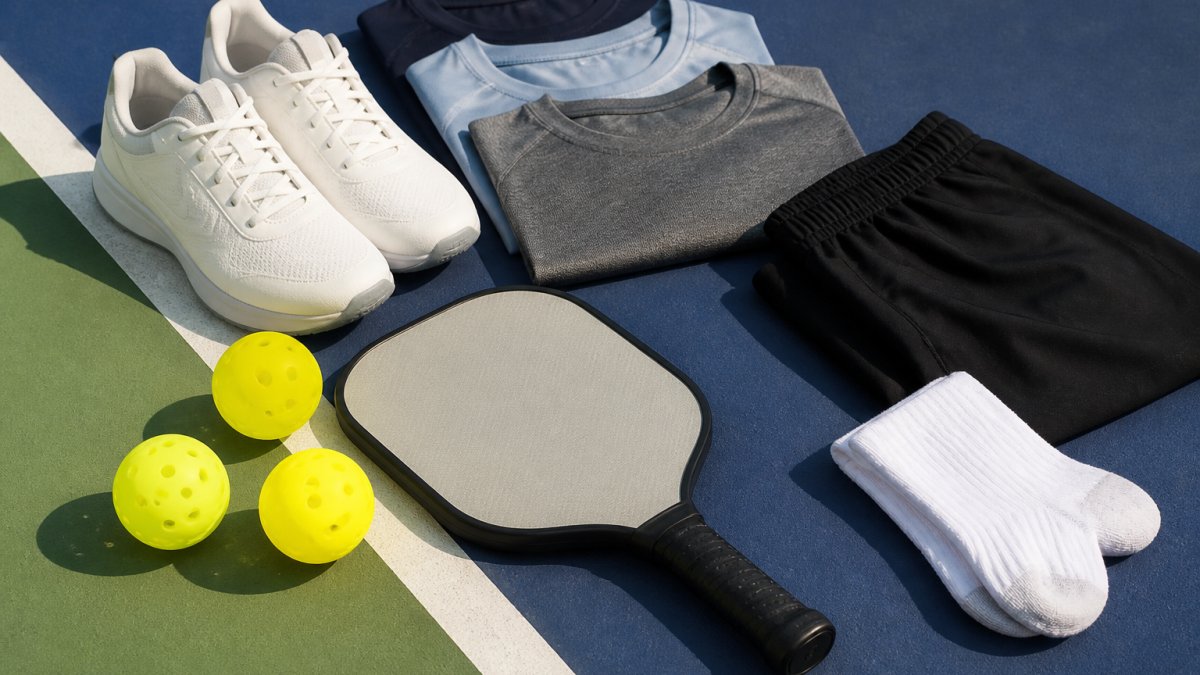
Most new players make one critical mistake: they buy equipment meant for intermediate or advanced players. A heavy paddle with a thin core might deliver power, but it exhausts your shoulder on day one. A ball designed for outdoor concrete courts bounces unpredictably indoors.
This guide covers the exact decisions you'll face when assembling beginner pickleball gear. We'll walk through paddle selection, ball choice, footwear, and budget planning so you can start confidently without overspending on features you won't use yet.
The paddle is your most important purchase, and choosing the right one shapes your entire experience. A beginner pickleball paddle should prioritize control and forgiveness over power. Your goal at this stage isn't hitting winners, it's keeping the ball in play and building consistency.
Home 2 Court carries the Selkirk VANGUARD Control Epic series, which offers beginner-friendly options at reasonable prices. The Vanguard Control Epic Midweight Raw Carbon and Vanguard Control Epic Lightweight Raw Control both feature a 16mm polypropylene honeycomb core that absorbs vibration and provides a larger sweet spot. These paddles deliver consistent ball control with a traditional build that feels solid without being heavy.


For budget-conscious beginners, the Miami Lulla Sport Pickleball Paddle at $34.99 offers genuine value. It features a fiberglass exterior, polypropylene honeycomb core, and specialized edge guard protection, all the core features beginners need. The vegan leather handle and comfort grip band make extended play sessions comfortable.

| Paddle | Price | Core Material | Best For | Weight Range |
|---|---|---|---|---|
| Vanguard Control Epic Lightweight | $199.99 | 16mm Polypropylene | Control-focused players | Lightweight |
| Vanguard Control Epic Midweight | $199.99 | 16mm Polypropylene | Balanced play | Midweight |
| Miami Lulla Sport | $34.99 | Polypropylene | Budget-conscious beginners | 7.7 oz |
Paddle weight directly affects how long you can play without fatigue and how responsive your shots feel. Lighter paddles (under 7.5 oz) are easier to maneuver and require less arm strength, making them ideal for beginners or players with joint concerns. Heavier paddles (8+ oz) offer more stability but demand more physical effort.
Most beginners benefit from a lightweight to midweight paddle, something in the 7-8 oz range. This weight provides enough control without exhausting your shoulder during a full court session. If you're coming from tennis, expect to feel the difference immediately. Pickleball paddles are significantly lighter, which takes adjustment but ultimately makes the game more accessible.
The control advantage of a lighter paddle matters more than raw power at your skill level. You'll make more consistent contact, develop better stroke mechanics, and enjoy longer rallies. As your game improves, you can experiment with heavier paddles if you want more pace.
Paddle thickness affects how the paddle feels and performs. Thicker paddles (16mm) provide a larger sweet spot and better vibration absorption, making them more forgiving on off-center hits.
For beginner pickleball gear selection, a 16mm paddle is the safer choice. The larger sweet spot means you'll make solid contact even when your timing isn't perfect. This forgiveness accelerates improvement because you're not constantly fighting equipment limitations.
Paddle shape comes in two main styles: traditional (teardrop) and wide-body. Traditional shapes concentrate the sweet spot in the center, rewarding good technique. Wide-body paddles spread the sweet spot across a larger area, providing more forgiveness.
Grip circumference affects hand fatigue and shot consistency. A grip that's too small forces your hand to work harder to maintain control. A grip that's too large creates tension in your forearm and wrist.
Measure your grip size by holding a ruler against your palm. Measure from the tip of your middle finger to the first crease of your palm. That measurement is your ideal grip circumference. Most beginners fall into the 4" to 4.125" range, which is why the Miami Lulla Sport's 4" grip works for many new players.
Handle length also matters for comfort during extended play. A longer handle gives you more use for power shots but can feel awkward if you have smaller hands.
Finding the right paddle weight is personal, but the principle is simple: lighter paddles are easier to control and less tiring, while heavier paddles provide more stability. As a beginner, you're still developing the muscle memory and technique to use a heavy paddle effectively.
A lightweight paddle in the 6.5-7.5 oz range lets you focus on stroke development without fighting equipment limitations. You'll notice the difference in how quickly you can adjust to different shot types and how long you can play comfortably. Many players who start with lightweight paddles never upgrade to heavier ones because they discover that control matters more than power.
If you have prior racquet sport experience (tennis, badminton), you might feel drawn to a heavier paddle initially. Resist that instinct. Pickleball rewards placement and spin over raw power, and a lighter paddle helps you develop those skills faster. You can always move to a heavier paddle later if your game demands it.
The ball you choose depends entirely on where you'll play, and this decision matters more than many beginners realize. Indoor and outdoor balls have different construction, bounce characteristics, and durability profiles.
Indoor balls are made from softer plastic with larger holes (26 holes) and bounce higher and faster than outdoor balls. They're designed for hard, smooth indoor court surfaces. The softer plastic reduces noise and provides better control for the precise shots indoor pickleball demands.
Outdoor balls are made from harder plastic with smaller holes (40 holes) and bounce lower. The harder material withstands rough concrete court surfaces and UV exposure.
Vanguard Control Epic Midweight Raw Carbon →
The Diadem Premier Power Pickleball Ball at $15.00 per 3-pack is USAPA approved and works for both recreational play and competitive matches. The high-visibility yellow color makes tracking easier during fast-paced games, and the consistent bounce and hardness ensure reliable performance across different court conditions.
If you'll play in both environments, invest in both ball types. The cost difference is minimal, and having the right ball for each setting dramatically improves your experience and extends ball life.
Pickleball demands lateral movement, quick starts and stops, and stable footwork. Regular running shoes or casual sneakers don't provide the support needed for court play. Court-specific shoes have reinforced lateral support, gum rubber soles for court traction, and cushioning designed for side-to-side movement rather than forward motion.
Look for shoes with a gum rubber sole, which grips court surfaces without marking them. The shoe should have reinforced heel and toe areas to handle the repetitive lateral movement pickleball demands.
Fit matters as much as features. Your shoe should feel snug without pinching, with room for your toes to move naturally. Many players buy court shoes a half-size larger than their regular shoes to accommodate the socks and foot swelling that occurs during play.
The investment in proper court shoes prevents ankle injuries and foot pain that can sideline you from play. This is not an area to cut costs, foot injuries develop gradually and become chronic without proper support.
Your total beginner pickleball gear investment depends on which products you choose, but planning by budget tier helps you make decisions strategically.
Budget Tier 1 ($100-$150): This covers absolute essentials with no compromises on quality. The Miami Lulla Sport paddle at $34.99, a 3-pack of Diadem Premier Power balls at $15.00, basic court shoes at $70-$80, and athletic apparel you likely already own. This tier gets you playing immediately without breaking your budget.
Budget Tier 2 ($250-$350): This tier upgrades your paddle to a premium beginner option like the Vanguard Control Epic series at $199.99, adds a second set of balls for different playing environments, invests in quality court shoes at $90-$100, and includes a paddle cover for protection.
Budget Tier 3 ($400+): This includes premium paddles, multiple ball sets for different conditions, high-end court shoes, a paddle bag, protective eyewear, and additional apparel. Most beginners don't need this tier immediately, but it makes sense if you're committing to regular play from day one.
New pickleball players consistently make the same equipment mistakes. Recognizing them saves you money and frustration.
Buying too heavy a paddle: The most common error is choosing a paddle designed for intermediate players.
Ignoring ball type differences: Playing outdoor balls indoors or indoor balls outdoors creates frustration and damages equipment. Commit to one primary playing environment and buy balls designed for it.
Choosing shoes for comfort instead of court performance: Regular sneakers feel comfortable in everyday life but don't provide the lateral support pickleball demands.
Buying a full equipment set before trying the sport: Some beginners invest heavily before playing their first game. Rent or borrow equipment for 3-4 sessions first.
Neglecting grip comfort: An uncomfortable grip creates hand fatigue and poor shot consistency. Test grip sizes before buying if possible.
Underestimating the importance of proper footwear: Many beginners treat shoes as a secondary purchase. Court-specific shoes are foundational to injury prevention and movement quality.
Choosing beginner pickleball gear doesn't require expert knowledge, it requires understanding your priorities and matching equipment to your actual needs. Home 2 Court carries quality beginner options across all these categories, from the affordable Miami Lulla Sport paddle to the premium Vanguard Control Epic series.
You need a paddle, a ball, and court shoes at minimum. A paddle ($35-$200) gives you the foundation for your game. Pickleball balls cost $15 for a pack of 3. Court shoes with good lateral support and traction are essential, running shoes increase injury risk on court surfaces. Many beginners borrow paddles or balls from friends or rental programs before committing to purchases, which is a smart way to test the sport before spending more.
Lightweight paddles between 6.5 and 7.5 ounces are ideal for beginners. They reduce arm fatigue, improve maneuverability, and help you develop proper technique without fighting the paddle's weight. Heavier paddles (8+ ounces) offer more power but demand stronger arm muscles and can lead to tennis elbow if your technique isn't solid. Start light and upgrade to midweight (7.5-8.5 oz) once you've played regularly for a few months.
Buy the type that matches where you'll play most. Outdoor balls are harder and have smaller holes to handle wind and rough court surfaces like asphalt. Indoor balls are softer with larger holes, designed for smooth gym floors and slower, more controlled play. If you play both indoors and outdoors, start with outdoor balls, indoor balls wear out quickly on outdoor courts. The Diadem Premier Power Pickleball Ball is USAPA approved and suitable for both environments.
Running shoes are not recommended for pickleball. They're designed for forward motion only and lack the lateral support needed for the quick side-to-side movements on court. Court shoes or pickleball-specific shoes have reinforced sides, better traction, and ankle support that reduce your injury risk. Investing in proper footwear from the start prevents ankle sprains and knee strain that can sideline you for weeks.

