No Products in the Cart


Quick Summary
To display collectibles well, choose a spot you see daily that gets no direct sun and little traffic, then group pieces by theme or color on a shelf or case. Use glass or acrylic fronts to block dust, and rotate items so the display stays fresh.
Last Updated: November 5, 2026
Display collectibles in your home with more care than simply putting things on a shelf. The right spot protects your pieces and makes them look intentional. The first step is always picking the right location.
Start by looking at where you spend the most time, since that is often the best place to display collectibles you love. A living room, a hallway, or a home office gets seen every day, so it is a good place for pieces you love. Bedrooms work well for quieter, more personal items.
Next, check the light. Direct sunlight fades paint, wood, and many collectibles over time. Keep your display away from south- and west-facing windows when you can. Indirect light from a lamp or a window at an angle is safer.
Also think about traffic. A spot next to a door or a busy hallway puts pieces at risk of bumps and knocks. Pick a wall or corner where people can admire the display without getting too close.
Here is a quick checklist to test a location:
The right shelf or case keeps your collection safe and makes each piece stand out. We recommend matching the display to the size and fragility of your items.
For small, flat pieces like plates, tiles, or small artwork, an adjustable easel works well. Home 2 Court's Adjustable Easels are made of vinyl-coated wire and fold flat for storage. They come in three sizes, and in clear or black.

For a dedicated case, consider a mahjong tile display case if you collect or play the game. The White Lotus Mahjong Tile Display Case from Home 2 Court is made of 8mm crystal-clear acrylic, holds a complete 160-tile mahjong set, and is designed to protect tiles between games. It can be styled on a coffee table, bookshelf, or bar.

Use this quick guide to choose:
| Item Type | Best Option | Why It Works |
|---|---|---|
| Plates and small art | Adjustable easels | Angles items for viewing |
| Mahjong tiles | Acrylic display case | Protects and shows tiles |
| Small figurines | Glass-front cabinet | Blocks dust and handling |
| Photos and prints | Wall shelf or frame | Keeps the look clean |
Glass or acrylic fronts help keep dust off your pieces. Choose based on how often you plan to handle your collection.
A good display looks planned, even when it grew over time. The trick is to group items with a shared theme, color, or material.
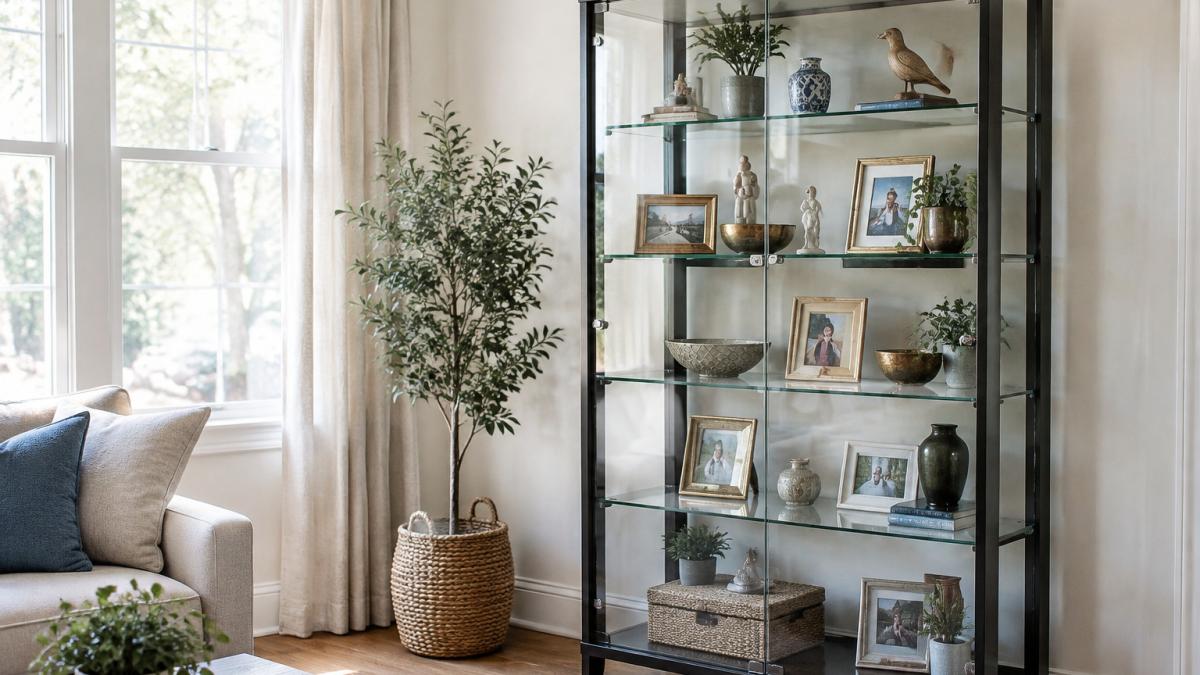
Try these simple arrangement ideas:
Frames can tie a collection together. The Scalloped 5x7 Frame in gold tone, from Home 2 Court, adds a classic touch to a shelf or mantel.

For a statement piece, the Vermont Evergreen Object from Simon Pearce, sold by Home 2 Court, works well as a centerpiece. Place it on a clear area so the eye lands on it first, then build smaller groupings around it.
Start with one main piece and two or three supporting items. Step back and check the balance before adding more.
Clutter happens when too many items compete for attention. Editing your collection is the fastest fix.
Start by removing anything you do not love or that does not fit the theme. Rotating items is another good option. Keep a few pieces on display and store the rest in a closet or box. Swap them out each season.
Follow a simple rule: one focal point per shelf. Choose the item you like best and build around it. Keep surrounding pieces lower and smaller so they support the main item.
Watch out: stacking items too closely can make even a beautiful collection look messy. Leave a few inches between pieces so each one can breathe.
A quick test helps. Stand across the room and look at the display. If you can name each item from there, the spacing works. If everything blurs together, remove a few pieces.
Small homes reward planning over square footage. The goal is to use vertical space and a few well-placed anchors so a collection reads as intentional rather than crowded. Below are concrete layouts, plus the weight and safety numbers that keep them from becoming a hazard.
Start with a measured plan. Pick one wall or surface per room and measure its width and height before buying anything. A single dedicated display zone beats scattered pieces in a small space because it concentrates attention and leaves the rest of the room calm.
Use these layouts as starting points:
Mind the weight. Wall shelves and cases have load limits, and small-space displays often hang on drywall rather than studs. Anchor heavy shelves into wall studs whenever possible; where studs are not available, use toggle or heavy-duty anchors rated for the load and follow the manufacturer's weight limit. As a rule of thumb, keep heavy items on lower shelves and sturdy floor-standing surfaces, and reserve upper floating shelves for lightweight pieces. Never hang a shelf or frame over a bed, crib, or seating area where a fall could injure someone.
Keep access in mind. In a small home, displays double as storage, so leave enough clearance to reach items for cleaning and rotation. A shelf mounted too high to dust safely defeats the purpose.
Rotate to fight crowding. Store off-season or secondary pieces in a closet or under-bed box and swap them a few times a year. Rotation keeps the display fresh and lets a small collection feel larger than the space it occupies.
Most display advice stops at "keep it out of the sun." The real work is matching the enclosure and location to what the piece is made of, because paper, textiles, ceramics, and metal fail in different ways.
Match the enclosure to the material. Paper, prints, and photographs are the most sensitive to light and moisture; frame them with UV-filtering glass or acrylic and keep them off exterior walls where temperature swings are largest.
Control light deliberately. Direct sun fades paint, wood, and printed surfaces, and the damage is cumulative and irreversible. Keep displays off south- and west-facing walls, or fit those windows with UV-filtering film or sheer curtains. LED bulbs emit far less ultraviolet and heat than incandescent, so swap display lighting to LED where you can.
Manage dust and handling. Open shelves collect dust fastest; a glass or acrylic front blocks most of it. Dust with a soft brush or microfiber cloth every few weeks rather than spraying cleaner onto the piece. Handle collectibles with clean, dry hands or cotton gloves, and lift ceramics and glass by the base, never by a rim or handle.
Watch the environment. Humidity swings warp wood, swell paper, and corrode metal. Avoid spots near heat vents, radiators, exterior doors, and bathrooms. A simple hygrometer is inexpensive and tells you whether a room stays in a stable range.
Prevent accidents. Keep items at least an inch back from any shelf edge, use museum putty or mounting wax on the base of lightweight pieces in high-traffic rooms, and choose cases with a secure latch if children or pets share the space. Anchor tall cases to the wall.
Use this checklist before you commit to a location:
A little planning saves time and prevents mistakes. Sketch your layout before you hang anything.
Step 1: Measure the wall or space. Note the width, height, and any outlets or fixtures.
Step 2: Lay out items on the floor. Arrange pieces in a rough layout and move them until the balance feels right. Take a photo to compare options.
Step 3: Mark your spots. Use painter's tape to outline shelves or frames on the wall. Check the level as you go.
Step 4: Find the studs. Use a stud finder to locate wall studs. Anchor heavy shelves into studs, or use anchors rated for the load.
Step 5: Hang and test. Install the shelf or hooks, then add items gently. Check that everything is secure before you walk away.
Safety tip: never hang a shelf or frame over a bed, crib, or seating area where someone could be hurt if it falls.
Once your layout is set, you can add pieces that fit your style. Home 2 Court carries a curated range of home decor, gifts, and display pieces that work together. Shop the Adjustable Easels for flexible display, the White Lotus Mahjong Tile Display Case for game night pieces, or the Scalloped 5x7 Frame for a touch of gold. Visit Home 2 Court to find the piece that completes your collection.
Mix vertical and horizontal surfaces so the eye moves across the room. Floating shelves, a glass-front cabinet, and a gallery wall of framed pieces each suit different collections. Group items by color, material, or theme in odd-numbered clusters of three or five, and leave some open space around each group. Rotating a few pieces seasonally keeps the display fresh without buying anything new, and a single statement piece on a stand can anchor an entire shelf.
Go vertical first. Wall-mounted shelves, a narrow bookcase, or a hanging display rack use space that would otherwise go unused. Choose one wall or one corner rather than spreading pieces across the whole room. A compact glass cabinet keeps dust off and makes a small collection feel deliberate. Keep the display to one zone so the room still reads as calm rather than crowded.
Glass-front or acrylic cases block dust while still letting you see the pieces. Keep displays out of direct sunlight, since UV light fades paper, fabric, and painted finishes over time. Avoid bathrooms and kitchens where humidity and grease build up. Secure shelves into wall studs and use museum putty or small adhesive pads so items cannot slide off during a bump or earthquake-style shake. Dust monthly with a soft brush or microfiber cloth.

