No Products in the Cart


Last Updated: October 27, 2026
Quick Summary
Wipe your pickleball paddle after each session with a damp microfiber cloth, and do a deeper clean every few weeks if you play often. Keep it out of hot cars and damp bags, and replace it when performance clearly drops rather than when it simply looks used.
Most players spend real money on a paddle, then let it sit in a hot car or get tossed in a bag with wet balls. A little routine care can help you care for your paddle. This guide covers cleaning, storage, and signs of wear.
Good maintenance can help you care for your paddle. The steps below are simple. Most take under five minutes.
A paddle's lifespan depends on how often you play, where you keep it, and what it is made of. Heavy play wears the face and edge guard faster. Heat and moisture do the most hidden damage over time.
Many players focus on the face and forget the rest. Here is what tends to shorten a paddle's life:
Watch out: Leaving your paddle in a closed car on a warm day can cause real damage. Keep it in the cabin or a shaded spot instead.
Wipe your paddle after each session. A soft, slightly damp microfiber cloth works well for most dirt and ball residue. Use plain water first, and only add a drop of mild dish soap if the face still looks dirty.
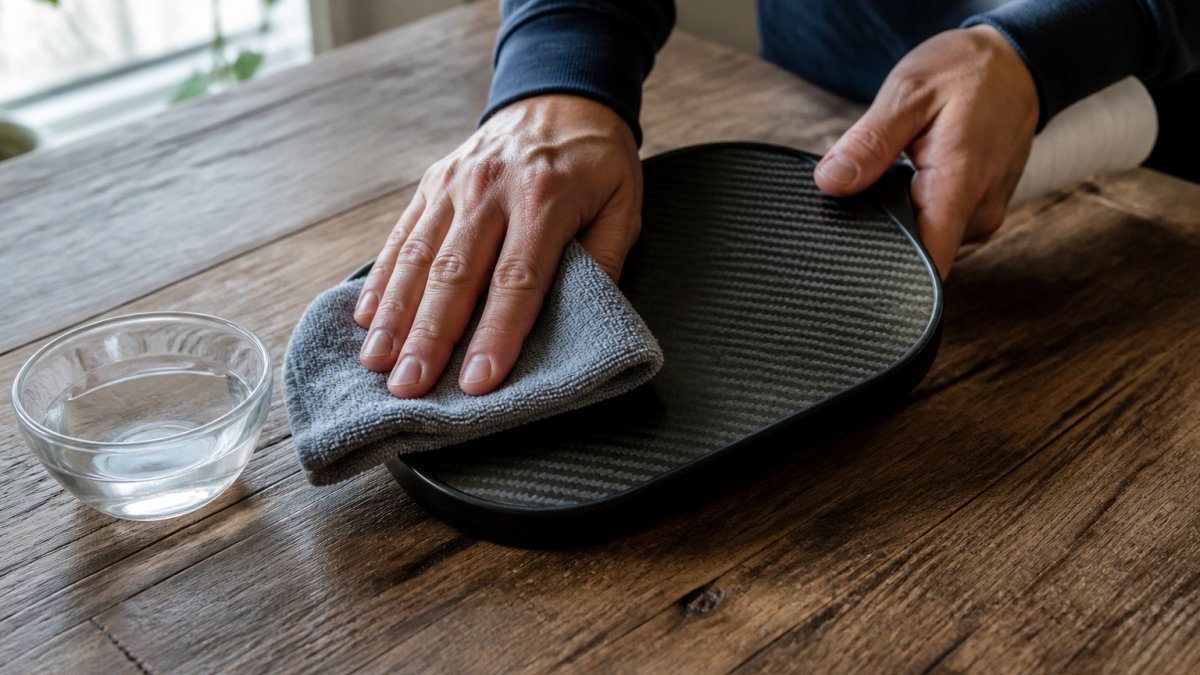
Here is a simple cleaning routine:
The method matters more than the product. Most paddle faces are damaged by too much water, too much pressure, or the wrong cloth, not by ordinary court dust. Keep the cloth damp rather than wet, use light pressure, and avoid soaking the edge where moisture can wick into the core.
Use a clean microfiber cloth, plain water, and a drop of mild dish soap for stubborn residue. A soft-bristled brush can help on textured faces, but use it lightly and only on the surface.
Avoid these common mistakes:
Raw carbon fiber paddles need extra care. The surface has a textured finish that holds grit and residue, and that texture is the source of spin. Aggressive cleaning wears it down faster than play does.
Use a damp microfiber cloth and light strokes. For stubborn ball residue, a paddle eraser is safer than a wet scrub. Avoid harsh solvents, abrasive pads, and anything with strong chemicals. These can strip the surface or damage the finish.
Many players ask how often to clean a raw carbon face. A quick wipe after each session is enough for most people. A deeper clean every few weeks helps if you play often or on outdoor courts. If the face feels slick even after cleaning, the texture may be worn rather than dirty, and more scrubbing will not bring it back.
Fiberglass and composite faces are usually smoother and more forgiving than raw carbon. A damp microfiber cloth handles most residue. Mild dish soap is fine for oily buildup from hands and balls.
Avoid scrubbing hard in one spot. Fiberglass can develop a polished, slick patch where the surface layer wears thin, and that spot will not hold spin the same way. Wipe evenly across the whole face rather than focusing only on the center.
Spray-on grit and applied texture are the most fragile surfaces. They sit on top of the face rather than being part of it, so abrasion removes them quickly.
Use only water and a microfiber cloth. Skip the eraser unless the manufacturer says it is safe, and never use a brush on a spray-on grit surface. If the grit starts flaking or smoothing in the center, cleaning will not restore it. That is a wear issue, not a dirt issue.
Vanguard Control Epic Midweight Raw Carbon →
A paddle eraser can lift stubborn residue from the face. Use it lightly, in short strokes, and only on the dirty areas. Pressing hard can scratch the surface or wear away texture over time.
Keep the eraser clean. A dirty eraser spreads grit back across the face. Replace it when it stops lifting residue or starts leaving smears.
Store your paddle in a cool, dry place out of direct sunlight. A padded paddle cover or a bag with its own racket compartment protects the face from dings and grit during transport.
Keep these habits in mind:
The handle and edge guard take daily wear that many players overlook. Sweat and oil can make the grip slippery and cause it to break down. A quick wipe with a dry cloth after play keeps it tacky.
Check the edge guard every few weeks. A cracked or loose edge guard can let the core take impacts it was not built for. If the grip is worn smooth, replacing the overgrip is a cheap fix that restores control.
The Vanguard Control Epic Midweight Raw Carbon features an EdgeSentry™ Edgeguard and an upgraded octagonal grip. Vanguard Control Epic Midweight Raw Carbon is available from Home 2 Court.

How often you clean and inspect your paddle should match how often you play. Use this simple schedule as a starting point:
| Playing Frequency | Wipe Face | Deep Clean | Check Edge and Grip |
|---|---|---|---|
| Once a week | After each session | Every 1 to 2 months | Every 1 to 2 months |
| 2 to 3 times a week | After each session | Every 2 to 4 weeks | Every 2 to 4 weeks |
| Daily or outdoor play | After each session | Every 1 to 2 weeks | Every 2 weeks |
Casual players can stretch these intervals. Competitive players and outdoor players should clean more often because grit and moisture build up faster.
A paddle does not last forever. The challenge is telling normal cosmetic wear from performance-ending damage. Use a repeatable inspection so you are not guessing after a bad session.
Run this check every few weeks, and always before a tournament or league match:
Keep playing if the wear is cosmetic and your play test feels consistent. Replace when a structural sign appears, when dead spots spread, or when a drop in spin persists after a proper cleaning. If you play daily or outdoors, inspect more often because grit and moisture build up faster.
Shop the Vanguard Control Epic Lightweight Raw Control.
Wipe the face and edges with a damp microfiber cloth and a few drops of mild dish soap in water, then rinse lightly with a clean damp cloth and air dry. Avoid soaking the paddle, because moisture can weaken the core and edge guard over time. Use a soft brush for stubborn ball residue, and skip harsh solvents, abrasive pads, and household cleaners that can damage the surface.
Clean your paddle after every few sessions of regular play, or sooner if sand, dirt, or sweat builds up on the face. Players who practice several times a week may want a quick wipe-down after each session. A deeper clean once a month keeps grit and residue from building up and helps the surface retain spin. Always let the paddle dry fully before putting it in a bag.
A pickleball paddle eraser can help remove scuffs and light marks from some paddle faces, but it should be used gently and sparingly. Use a soft, non-abrasive eraser with light pressure, and test a small area first. Avoid aggressive scrubbing, because repeated rubbing can wear the textured raw carbon fiber surface and reduce spin. A microfiber cloth with mild soap is usually the safer first choice.
Store your paddle in a padded case or the bag it came with, in a cool, dry place away from direct sunlight. Do not leave it in a hot car, where heat can warp the materials, or in damp areas like a garage that gets humid. Keep it upright or flat so it is not pressed against other gear, and avoid stacking heavy items on top of it.
A well-cared-for pickleball paddle often lasts several years, though lifespan depends on how often you play, your play style, and how well you protect it. Proper cleaning, dry storage, and a cover reduce wear on the face, core, and edge guard. Replace the paddle when the performance clearly declines or structural damage appears, rather than waiting for a set number of years.

