No Products in the Cart


Last Updated: October 30, 2026
Quick Summary
To set up a home bar cart for beginners, buy the cart first, then add a three-piece shaker, jigger, Hawthorne strainer, bar spoon, and four tumblers, which costs roughly $105 to $242. Stock five spirits, four mixers, and three glass types, and organize the top shelf as your work zone.
A home bar cart works best when you pick the cart before the bottles. The cart sets your limits: storage, placement, and budget left for the fun part.
A bar cart is a small, movable piece of furniture that holds your spirits, tools, mixers, and glassware in one place. Good carts have two or three tiers, locking casters, and a workable top surface.
Three things matter more than looks:
Beginners don't need a full professional kit. Buy in this order and stop when your budget runs out.
Tier 1, The working cart (buy this first):
That's a usable cart for roughly $105 to $242. You can make a Whiskey Sour, a Daiquiri, and a Gin and Tonic with this list plus three bottles.
Tier 2, Round it out (buy next):
Tier 3, Nice to have (buy last, or never):
Skip the 12-piece kits. Most beginners use six of the twelve pieces and store the rest in a drawer.
Spending more doesn't automatically get you a better bar. It gets you better materials and fewer compromises. Here's how we'd split a budget at three levels, using the prioritized list above.
| Budget | Cart | Tools | Glassware | Bottles | What You Give Up |
|---|---|---|---|---|---|
| $150 | Basic two-tier metal or wood ($60-$90) | Shaker, jigger, spoon, strainer ($33-$67) | Four tumblers ($12-$25) | Two bottles | Fewer bottles, less display space |
| $300 | Sturdy cart with locking casters ($100-$150) | Full Tier 1 and Tier 2 tool set ($70-$120) | Six to eight mixed glasses ($30-$60) | Four to five bottles | Still no dedicated mixing glass |
| $500 | Solid wood or brass with a work surface ($180-$280) | Everything above plus a muddler and peeler ($90-$150) | Full set for six guests ($60-$100) | Six to seven bottles plus vermouth | Nothing essential |
Put your money into the cart and the shaker first. Those two items take the most abuse. Glassware can grow over time, and a mismatched set looks intentional if you commit to it.
Put the cart where people already gather, not where it looks best in a photo. A dining room corner, the end of a kitchen counter, or a living room wall away from direct sun all work.
Keep these rules in mind:
If you're short on floor space, a wall-mounted shelf or a slim console can work too.
You need six tools to make almost any classic cocktail: a shaker, a jigger, a bar spoon, a strainer, a citrus peeler, and a muddler. Everything else is a nice extra.
A 4-piece stainless steel barware set includes a cocktail shaker, bar spoon, measured pourer, and strainer in one purchase. If you'd rather buy one piece you'll keep for years, a crystal cocktail shaker with a built-in strainer is another option.


Stock your cart around the drinks you actually make, not the bottles that look impressive. Five spirits, four mixers, and three glass types cover dozens of classic recipes.
These five bottles unlock the widest range of cocktails per dollar:
Add sweet vermouth and dry vermouth once you're comfortable. They're the gateway to martinis and Manhattans, but they spoil. Keep them in the fridge, not on the cart.
A common mistake is buying a bottle for one recipe and never touching it again. If a spirit only appears in one drink you make twice a year, skip it.
Mixers take up the most cart space and get used the fastest. Keep it tight:
Nonalcoholic guests deserve better than a sad glass of soda. Stock a good NA beer, a quality tonic, and fresh lime.
Ice is the ingredient people forget. An ice bucket holds ice for your drinks. Buy more ice than you think you need.
Glassware: six tumblers, four stemmed glasses, and two martini or coupe glasses will serve a small gathering. Skip the novelty shapes.
4 Piece Fortify Stainless Steel Barware Set - True Brands →
Organize by how often you reach for something, not by bottle height. The top shelf is your work zone.
Set it up like this:
Keep bottles label-out and grouped by type. Whiskey with whiskey, gin with gin. It looks tidier and it's faster to find things mid-conversation.
Every few months, pull everything off and wipe the shelves. Sticky rings from bottle bases are the number one reason a cart starts to look shabby.
Style the cart last, and style it with restraint. Three decorative objects is plenty.
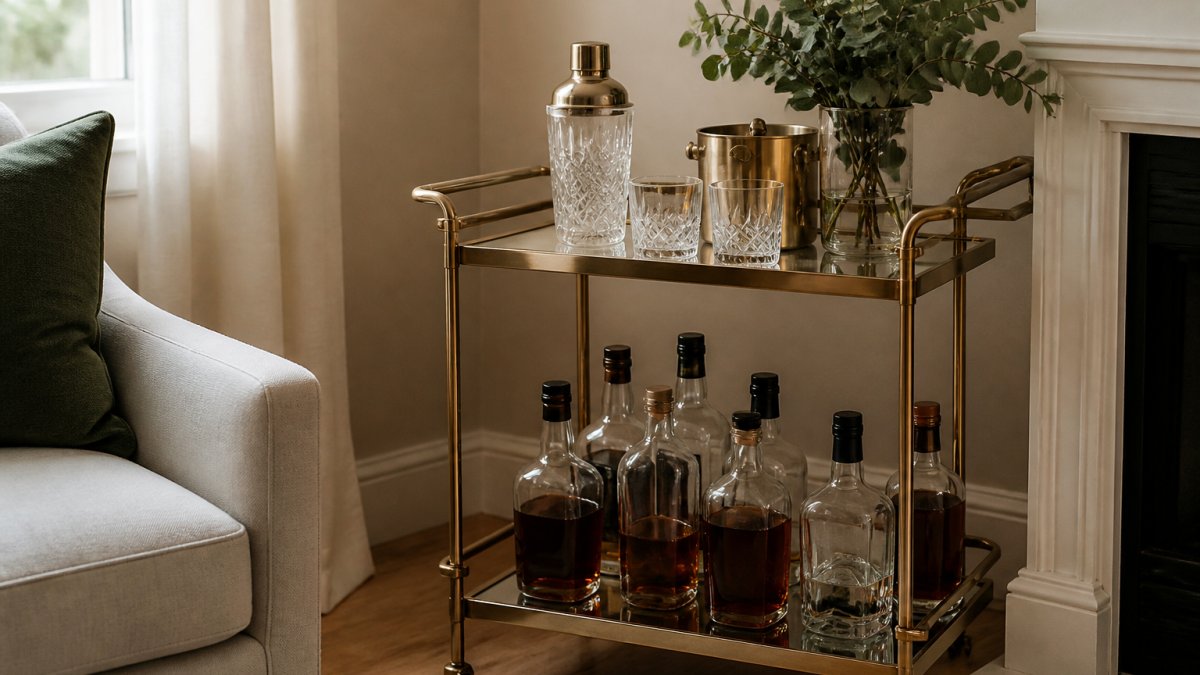
Try these combinations:
Group items in odd numbers. Three bottles together look styled; four look like a shelf. Leave the top surface partly clear so you can set a drink down.
If you want a piece that earns its place visually, an enameled cocktail shaker adds color and shape.

Small spaces reward vertical storage and things you can move.
Options worth considering:
Child safety deserves a real plan. Use a cart with locking casters, keep the heaviest bottles on the bottom, and consider a cabinet with a latch if small children are in the house.
For renters, choose furniture you can take with you. A cart moves house easily. A built-in bar does not.
Three drinks cover most of what guests ask for: a stirred whiskey drink, a shaken citrus drink, and a fizzy long drink. With bourbon, white rum, tequila blanco, limes, simple syrup, and soda, you can make all three with the Tier 1 tools above. No specialty liqueurs, no obscure syrups.
Old Fashioned, tools: jigger, bar spoon, peeler
Daiquiri, tools: jigger, shaker, Hawthorne strainer, fine-mesh sieve (optional)
Paloma, tools: jigger, bar spoon
A starter cart will run out of something mid-party. These swaps keep you pouring:
For guests who aren't drinking, you don't need a separate shopping list. Build from the same mixers:
Building a bar cart in stages beats buying everything at once.
Browse the full bar and home selection to find barware and home pieces for building a cart.
A cart you can use is worth more than a cart that photographs well. Start with six tools, five bottles, and one good shaker. The rest grows from there.
Setting up a bar cart is a small project with a big payoff: fewer trips to the kitchen, better drinks, and a corner of your home that's always ready for company.
A beginner setup needs four things: a cart with at least two shelves, a shaker, a jigger or measured pourer, and a strainer. From there, add one clear spirit, one brown spirit, a mixer or two, ice, and two to four glasses. The 4 Piece Fortify Barware Set includes a cocktail shaker, bar spoon, measured pourer, and strainer for $50.
Plan on three tiers. A minimal cart runs about $150 total when you keep tools under $60 and buy two or three bottles. A comfortable setup lands near $300 with four to six bottles, proper glassware, and an ice bucket. Above $500 you are paying for display pieces like crystal shakers and decorative buckets.
Split the cart by job, not by looks. Put the work zone, meaning shaker, jigger, spoon, and strainer, on the top shelf where your hands reach first. Keep bottles on the bottom shelf with labels facing out, tallest at the back. Group mixers and glassware on a tray so they lift off as one unit. Restock and wipe down the cart weekly, and clear anything you have not used in a month.
Follow a two-thirds rule: fill roughly two-thirds of each shelf and leave the rest open. Use one tray per shelf to corral small items, add one vertical element such as a vase or tall bottle, and cap decor at two or three pieces. Match the metal finish to your other hardware and keep glassware to one style.

