No Products in the Cart


Last Updated: October 26, 2026
Quick Summary
Modern hosting etiquette means preparing for guests before they arrive by confirming arrival times, asking about food needs, and preparing shared spaces so people feel expected. Good hosting etiquette is less about perfect place settings and more about small preparations, clear boundaries stated early, and simple meals that keep both host and guest relaxed.
Good hosting starts days before anyone rings the doorbell. Modern home hosting etiquette for guests is less about perfect place settings and more about small preparations that make people feel expected. It is a way of setting a stage: quiet, calm, and ready.
House guest etiquette is the shared set of expectations between host and guest that keeps a visit comfortable for everyone. It covers timing, space, meals, and privacy. The host sets the tone early, and guests follow.
A pre-visit text does more work than a spotless house. Ask three things: arrival time, food needs, and how much downtime they want. That last one matters most. Some guests want plans. Others want a quiet corner and a book.
Send a short message a few days ahead. Keep it warm, not formal.
A common mistake is waiting until guests arrive to sort these details. By then, everyone is tired and polite, and nobody wants to bring up the dog or the dairy allergy.
Walk your home like a guest would. Start at the front door and notice what you see first.
Clear a spot for shoes and bags. Make sure the bathroom has a hand towel, soap, and a place to set a toiletry bag. An acrylic guest towel caddy offers a tidy, modern way to display guest towels in shared spaces. A guest towel holder keeps folded towels tidy and signals that the space is ready.

Small signals like these tell guests they can relax. That is the whole goal.
The best overnight guest essentials are the things people are embarrassed to ask for. Think water, a phone charger, and a place to put their things. A guest room does not need to be a hotel suite. It needs to answer the questions guests are too polite to ask.
Stock the room with a short, practical list:
Watch out: a guest room with no reading light or outlet near the bed forces guests to ask for help. That small ask can feel like a burden to them.
A welcome basket should feel like it was made for one person, not pulled from a shelf. The trick is to build around what you already know about your guest. A runner who visits often might appreciate a cold water bottle and a snack bar. A reader might appreciate a book and good tea.
Start with a simple base. A rectangular tray gives you a foundation for a welcome basket.
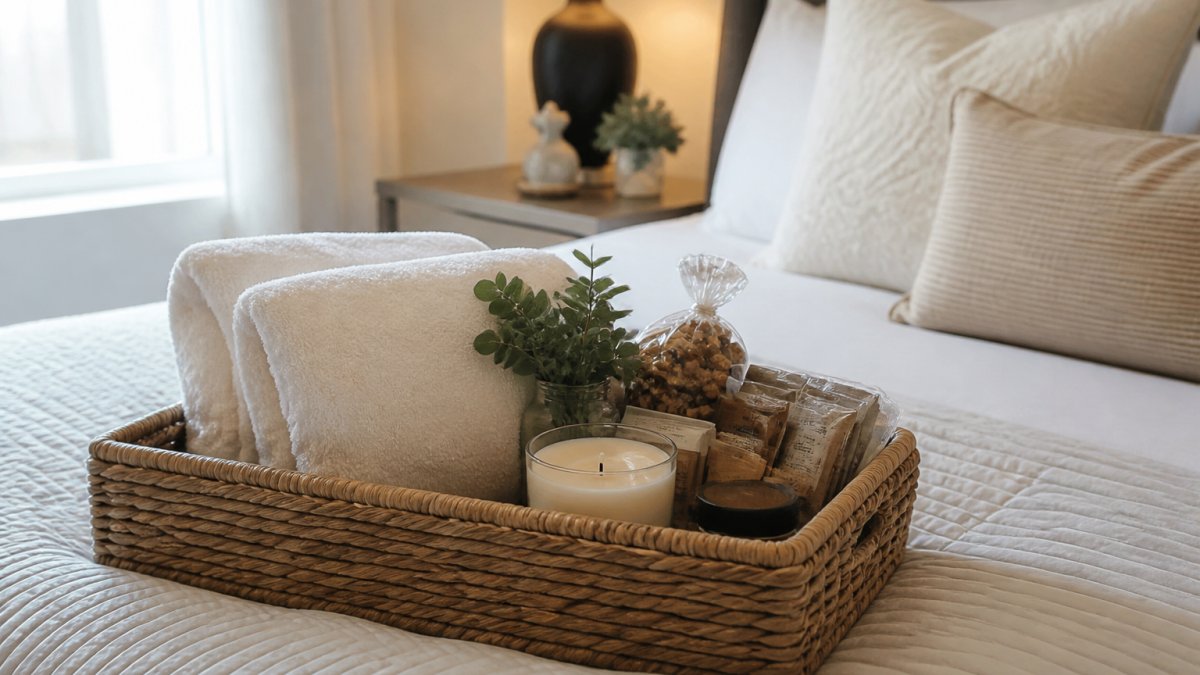
| Guest Type | Add These Items | Why It Works |
|---|---|---|
| Weekend relaxer | Candle, tea, cozy socks, snack mix | Signals slow mornings |
| Business traveler | Charger, notepad, water bottle, granola | Supports a work routine |
| Parent with kids | Juice boxes, crayons, small toys, wipes | Keeps little ones busy |
| Foodie friend | Local treats, olive oil, a good snack | Feels thoughtful and local |
| Long-stay guest | Laundry pods, extra towels, a book | Eases a longer visit |
Keep a handwritten note on top. Three lines is enough. It turns a basket of things into a welcome.
Guest boundaries work best when you state them early and kindly. A boundary shared before arrival feels like information. The same boundary shared on day three feels like a complaint. So say it upfront, in a warm tone, and most guests will simply follow it.
Try these phrases:
A common mistake is hinting instead of saying it. Hinting leaves guests guessing, and guessing is stressful.
4 Piece Fortify Stainless Steel Barware Set - True Brands →
The real difference between a smooth visit and a tense one comes down to clarity. Say the thing once, kindly, and let it go.
Meals cause more host stress than any other part of a visit. The fix is simple: plan less, ask more. Most guests would rather have a relaxed pasta night than an elaborate dinner that leaves you exhausted.
Ask about dietary needs before they arrive, not at the table. Keep a short list of what each guest can and cannot eat. Then build meals that work for everyone, or offer a simple swap on the side.
Watch out: cooking a single dish loaded with a common allergen, like shellfish or nuts, can leave one guest with nothing to eat. Keep one plain option on the table.
Timing surprises are normal. How you handle them sets the mood for the whole visit. The goal is to stay warm and flexible without letting your own plans fall apart.
If guests arrive early, greet them kindly and give them a place to settle. "Come in, drop your bags, I'm just finishing up" works better than a stressed apology.
If guests arrive late, keep dinner simple and warm. Do not hold the whole evening hostage to a schedule.
If a guest overstays, a gentle signal helps. Mention your next commitment a day ahead: "We've got an early start Thursday, so we'll say our goodbyes Wednesday night." Most guests take the hint with grace.
The thing nobody tells you about hosting is that flexibility is a skill, not a personality trait. You can plan for it.
A well-stocked home makes hosting feel easy. Keep a small hosting kit so you are never scrambling before a visit. This is the practical side of hosting etiquette, and it pays off every time.
Keep these on hand:
A barware set can be part of a hosting kit. The stainless steel barware set includes a cocktail shaker, bar spoon, measured pourer, and strainer. For serving, the black rectangular tray has two side handles.


Guests remember how a visit felt, not how many dishes you served. A calm host with a simple plan beats a stressed host with a perfect table.
Proper hosting etiquette starts with clear communication before the visit: confirm arrival times, share any house rules, and ask about dietary needs. When guests arrive, show them where to put their things, offer a drink, and give a quick tour of the spaces they will use. Good hosting etiquette means making people feel oriented and comfortable without hovering. Small touches like a welcome basket or fresh towels go a long way toward making guests feel genuinely cared for.
Overnight guest essentials include clean bedding, fresh towels, a place to set luggage, and access to a bathroom with soap and toiletries. Add a bedside lamp, a phone charger, and a small water carafe. A welcome basket with snacks, a candle, or a handwritten note elevates the stay. Keep a spare toothbrush and basic toiletries on hand in case something is forgotten. These details show you planned ahead and help guests settle in without asking for basics.
Ask during the initial invitation or a pre-visit check-in, not at the dinner table. A simple text like, 'I'm planning meals, is there anything you don't eat or avoid?' works well. Frame it as a practical planning question rather than a personal one. If you are hosting a group, a shared note or group message lets everyone share without singling anyone out. Having a few flexible options on hand, like a simple salad or fruit, covers gaps without drawing attention.
Asking guests to remove their shoes is a common house rule and not inherently rude, but how you ask matters. A small sign near the door, a bench with a shoe tray, or a light comment like, 'We go shoeless inside,' sets the expectation without confrontation. Provide a place for shoes and offer slippers if you want to be extra welcoming. Most guests appreciate clear expectations, and a friendly tone keeps the request from feeling like a criticism.
Hosting well takes practice, and the small details add up fast. At Home 2 Court, we stock the trays, towel holders, barware, and thoughtful extras that make guests feel at home. Our curated selection covers home decor, unique gifts, and bridal registry services, so you can build a welcoming space without the guesswork. Get started with Home 2 Court and turn your next visit into the one guests talk about for all the right reasons.

