No Products in the Cart


Last Updated: October 29, 2026
Quick Summary
Pickleball court etiquette means sharing courts fairly by respecting rotation rules, calling lines honestly, and staying safe and courteous during open play. Following these unwritten norms keeps games moving and helps new players feel welcome.
Walk onto a busy pickleball court for the first time and the unwritten rules hit you fast. Someone waves you toward a line, a group of players stares at the paddle rack, and nobody explains where to stand. That is why essential pickleball court etiquette for new players matters so much. Home 2 Court, a shop built around both home living and active play, put this guide together to help beginners feel confident from their first session.
Pickleball courts run on shared rules, and most of them are never printed on a sign. Players rotate in and out, call their own lines, and share limited court time. When one person ignores these norms, the whole session slows down.
Good etiquette does three things:
Think of etiquette as the glue that makes open play work. It is not about being stiff or formal. It is about being considerate.
Court rotation is the system that decides who plays next, and it is the single biggest source of beginner confusion at open play.
Winners-stay (also called stay-and-play). The winning team stays on court and splits up, and the next two players in line rotate in. This format moves fast and rewards consistency, but it can leave beginners sitting for long stretches if they keep losing. Ask the organizer whether losers rotate off immediately or finish a set number of games.
Paddle-stack (next-up-in-line). You place your paddle in the rack or on the ground in the next open slot.
Court-assigned or timed sessions. Some clubs assign foursomes by skill level and rotate every 15 to 20 minutes on a whistle or timer.
Here is the typical flow at a paddle-stack facility:
Many public parks and rec departments now run court time through a booking app or an online reservation portal rather than a physical paddle rack.
Before your first session, do three things:
If a court is reserved through an app, do not set up on it just because it is empty. A reserved foursome can arrive at any minute, and asking them to wait is a fast way to start off on the wrong foot.
When players are lined up, do not walk onto a court that has not been called for you. Stepping in early can disrupt a group that is about to finish a game. If you are unsure whose turn it is, use a short, neutral script rather than a confrontation:
That simple question prevents most arguments before they start. Watch out for cutting the rack, even by accident, because it is one of the fastest ways to lose goodwill with regulars. If you arrive late, check the list or app before you assume your spot is still open.
Facilities usually run one of a few rotation formats, and each one changes what a new player should do on arrival.
| Format | What to do | Key difference |
|---|---|---|
| Winners-stay (stay-and-play) | Ask whether losers rotate off immediately or after a set number of games | Winners stay on court; beginners may sit out longer |
| Paddle-stack (next-up-in-line) | Place your paddle in the next open slot | The four paddles at the front take the court |
| Court-assigned or timed sessions | Stay with your assigned group until the rotation call | Rotation happens every 15 to 20 minutes |
Line calls are a big part of pickleball culture, and they are where beginners most often accidentally offend people. Most casual games use a self-calling system, where each player judges whether a ball landed in or out on their own side of the court.
Follow these habits:
Also remember the non-volley zone, often called the kitchen. You cannot volley while standing in it, and a foot touching the kitchen line on a volley counts as a fault.
Most line-call disputes are not really about the ball. They are about tone. Having a few neutral phrases ready lets you defuse the moment without backing down or escalating. These scripts work because they name the situation instead of the person:
Diadem Premier Power Pickleball Ball →
A common pattern is that the player who stays calm and offers a replay usually wins the goodwill of the group, even if they lose the point. Regulars remember who was easy to play with.
If a call stays contested and neither side will move, the standard fallback is to replay the point. Replaying costs a few seconds and preserves the game.
Finally, remember that line calls are a two-way street. When you are the one making a close call, call it loudly and immediately, and give your opponent the benefit of the doubt on balls you did not clearly see.
Open play sessions are where most new players learn the social side of the game. They are also where good manners matter most, because different skill levels share the same courts.
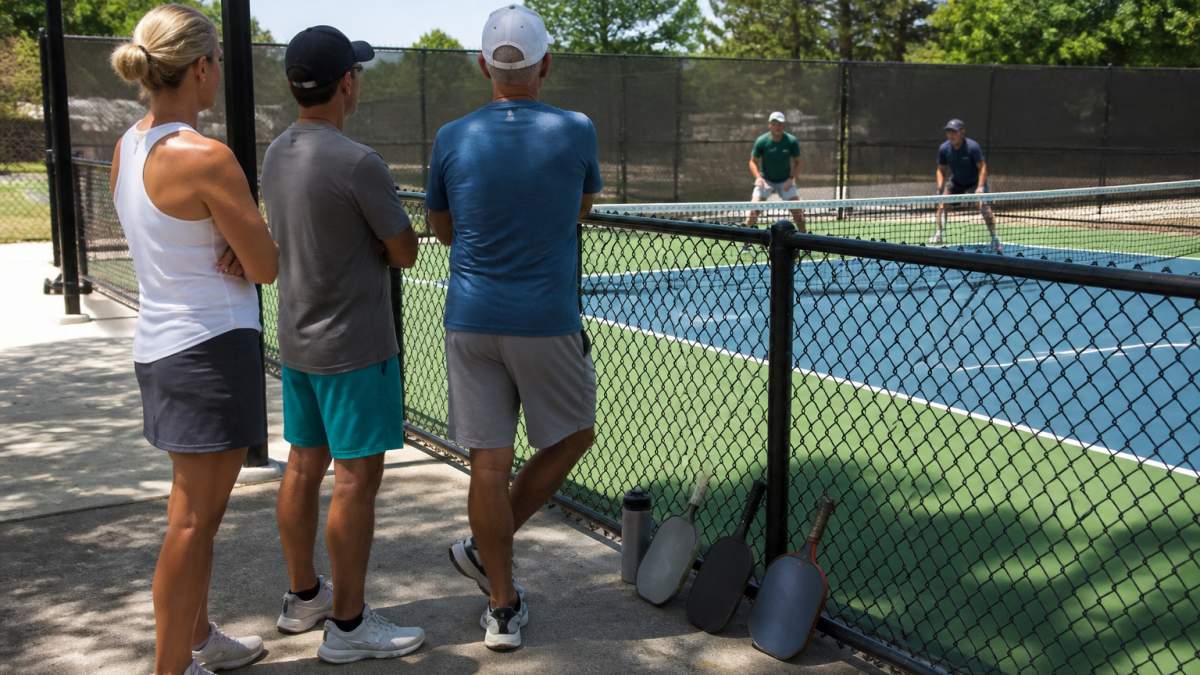
Keep these basics in mind:
Sportsmanship matters just as much as skill. Congratulate good shots, say sorry after a stray ball, and avoid complaining loudly after a missed point. Calm players are easier to play with, and they tend to get invited back.
Telling people your skill level up front helps everyone plan a fair game. It also lets experienced players adjust their pace and shot choice so beginners do not feel overwhelmed.
Try a short, friendly introduction like one of these:
Skill signaling works both ways. If you are a more advanced player joining a beginner group, slow down your serves and keep your power shots for a later game. Inclusive language, such as "we" and "let's," keeps the mood welcoming for everyone.
Ball retrieval is one of the most overlooked parts of court etiquette. Balls that roll onto other courts can cause injuries and interrupt play. Use these habits to stay safe and courteous:
Proper court footwear also matters. Shoes made for court sports are generally designed to offer grip and lateral support for quick side-to-side movement.
Safety also includes warming up. Spend five to ten minutes on light movement, arm swings, and easy hits before you play. Skipping this step can leave players sore or strained after a long session.
Most beginner mistakes are easy to fix once you know what to watch for. Here are the most common ones:
If you make one of these mistakes, a quick apology and a smile usually fix it. Regular players understand that everyone is learning.
Once you understand the etiquette, the next step is getting on court. Many clubs and open-play groups run on a booking or drop-in system, so check the rules before you arrive.
When you are ready to choose gear, focus on a few basics:
Home 2 Court carries a range of pickleball equipment for players at every level. Our Diadem Premier Power Pickleball Ball features a high-visibility yellow color that makes it easy to track during fast-paced games. For a paddle, the Miami Lulla Sport Pickleball Paddle features a specialized comfort grip band and a vegan leather handle. Players who want more control as their game develops may also consider the Vanguard Control Epic Lightweight Raw Control paddle at $199.99, which is designed for skilled pickleball play.


Good etiquette and the right equipment make your first sessions far more enjoyable. If you're still deciding what to buy, our beginner pickleball gear guide walks through choosing a paddle, shoes, balls, and budget for your first season.
Keep play moving and stay safe. Respect the rotation, call your own lines honestly, and never walk behind a court while a point is being played. Most court disputes come from players who ignore the people waiting or who make a rushed or unclear call, so slow down, be courteous, and let the rally finish before you cross any open space.
Follow the rotation the group has agreed on, usually winners stay on and the next waiting team steps in. Check the paddle rack or sign-up sheet if your facility uses one. When a game ends, leave the court promptly so the next group can start. If you are unsure whose turn it is, ask politely before the first serve rather than mid-game.
Make your call clearly and briefly, such as "out" or "in," as soon as the ball lands. If you are not sure, say so and give the point to your opponent, since that is the accepted practice. Avoid arguing. Friendly, quick calls keep the game flowing, and most open play groups respect a new player who is honest about close shots.
Yes. Crossing behind the court during a rally distracts players and can cause injury. Wait for the point to end, then move quickly and quietly behind the baseline or use the designated walkway. If your ball rolls onto another court, ask for it between points rather than running across during play.

